- SMALL ORDERS FOR STANDARD ITEMS. Contact Now
- OUTDOOR COOLING SOLUTIONS, MADE IN‑HOUSE. Contact Now
- COOLER BOXES THAT FIT REAL OUTDOOR LIFE. Contact Now

 LANGUAGE
 日本語
 Español
 عربى

Content
A branded backpack cooler that leaks, warms up by noon, or loses its logo after three washes is not a gift. It is a liability that sits in a warehouse. The opposite is also true: a well specified cooler with a clean company logo gets used at tailgates, on day hikes, and at job sites, which turns a promotional spend into repeated brand exposure. The difference comes down to four purchase decisions: insulation construction, logo method, sample approval, and the supplier's ability to repeat the same quality at volume.
Start with the End Use, Not the Logo
Buyers often start with a logo file and a target price. A more reliable starting point is the carrying pattern. A backpack cooler is worn on the body, so weight distribution, strap width, and how the bag sits against the back matter as much as cooling performance. If the cooler will be handed out at a trade show for short commutes, a 5 L to 13 L soft or hard portable cooler may be enough. If recipients will pack lunch and drinks for a full day of fishing or hiking, 14 L to 26 L gives more usable space without becoming a burden.
Capacity alone does not predict satisfaction. A 20 L cooler that uses cheap EPS foam with gaps around the lid will underperform a 14 L unit with a well fitted PU foam lid and a proper gasket. For logo gifts, the practical target is usually 8 to 24 hours of cold retention in moderate heat, with ice packs rather than loose ice, because loose ice adds weight and creates leaks when the bag tips. This is where the factory behind the product matters: injection molding, blow molding, and foaming done in one facility can hold tolerances tighter than a trading company assembling parts from multiple workshops.
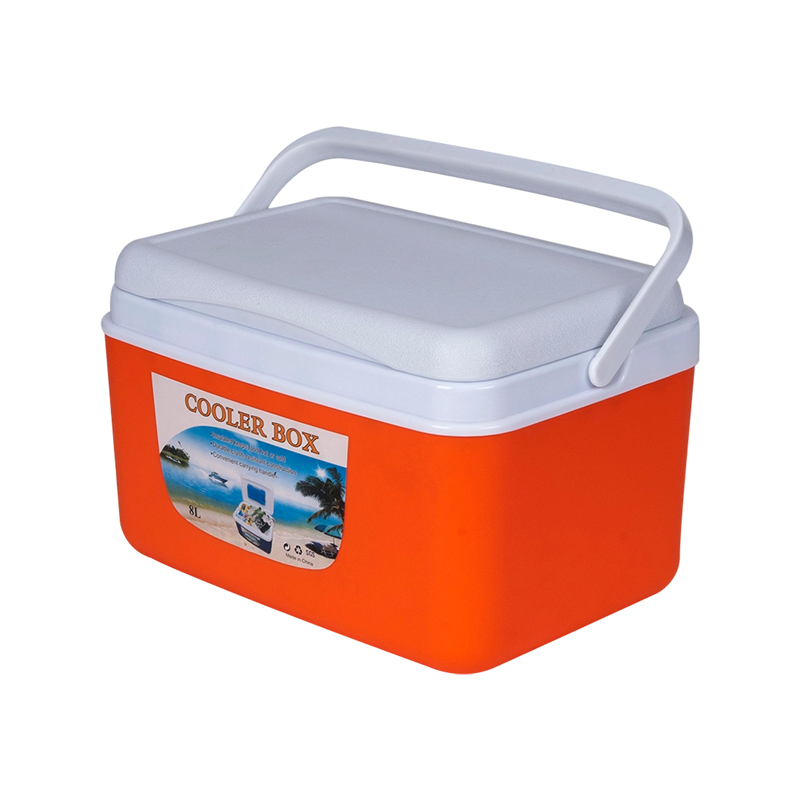 8L Portable Cooler Box with Built-In Ice PackCompact 8L cooler with PP lining, PE shell, EPS insulation, and built-in lid ice pack; offers up to 36 hours insulation for small-capacity cold storage.View Product →
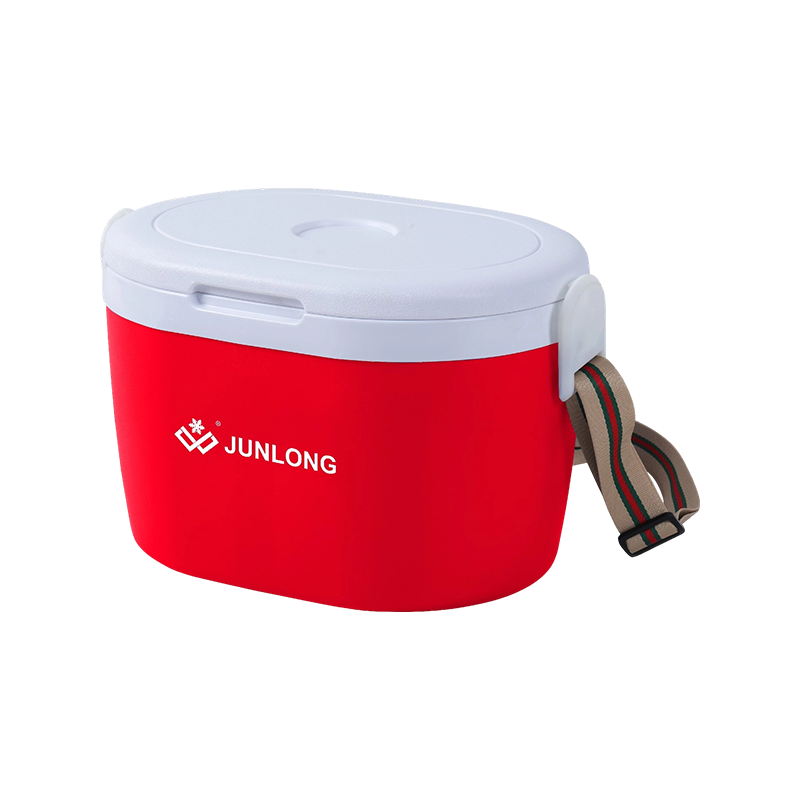 14L Portable Insulated Cooler Box for Camping and FishingLightweight 14L PP/EPS cooler box with locking lid and top handle; suits box-format cooling where insulation fit and capacity matter.View Product →
For a backpack format specifically, check shoulder strap attachment points. Stitching should be reinforced with bar tacks, and the zipper should be a coil or molded tooth type that does not freeze shut after a day in a cooler. If the supplier only offers a standard box cooler, that may still work as a companion item, but it will not deliver the same hands free convenience.
Logo Methods That Survive Real Use
The best logo method depends on the shell material. On hard plastic cooler boxes, pad printing, screen printing, and in mold labeling are common. In mold labeling places the graphic into the plastic surface during molding, so it cannot peel off. It costs more upfront because a printed film or label must be produced, but it is the most durable option for a premium corporate gift. On soft sided backpack coolers, embroidery and heat transfer are typical. Embroidery looks richer but can create tiny holes in a waterproof coating if the backing is not sealed. Heat transfer gives fine detail and full color, but low grade transfers crack after repeated flexing.
Ask for a wash and abrasion test on the actual production material, not a generic sample. A useful benchmark is 25 rubs with a wet cloth and 50 cycles of opening and closing the lid or zipper. The logo should remain legible, with no more than slight color shift. Also confirm color matching under daylight. A company logo in Pantone 186 C can look orange under warehouse lighting and red under sunlight if the ink batch is not controlled. For buyers sourcing from a manufacturer that also runs its own brand, this is a fair question: who mixes the ink, and how is the batch recorded?
Insulation and Material Choices Buyers Should Verify
Backpack coolers generally use one of three insulation approaches: PU foam, EPS foam, or vacuum insulated panels. PU foam offers a good balance of cost, weight, and thermal performance and is common in mid range coolers. EPS is cheaper and lighter but tends to crack over time, which reduces performance after a few seasons. Vacuum panels deliver the best insulation per millimeter but are expensive and usually reserved for high end hard coolers. For a logo gift, PU foam with a tight fitting lid and a rubber gasket is the most reliable compromise.
The outer shell also affects perceived quality. A blow molded HDPE shell resists impact and UV light, while a thin ABS shell may look glossy at first but crack at stress points. Liners should be food grade and smooth, because rough liners trap odors and are hard to clean. If the cooler is meant for drinks, check that the interior drain plug, if present, seals without tools. A slow leak is the most common complaint in field returns, and it is almost always a gasket or drain seal issue rather than an insulation failure. A manufacturer with in house foaming and assembly can inspect these joints before packing. For a deeper explanation of cooler box construction, the article on what is a cooler box covers the basic categories and how they differ.
MOQ, Sampling, and Customization Workflow
Custom logo projects fail most often at the sampling stage. A supplier may show a beautiful catalog photo, then deliver a sample with a logo that is 2 mm off center or a lid that does not seal. The fix is to treat the sample as a production trial, not a formality. Ask for the sample to be made with the same mold, foam density, and logo transfer method that will be used in mass production. If the supplier cannot explain the mold number or foam density, the sample is not representative.
Minimum order quantities vary by product and customization. Standard products are often available in smaller trial orders, while full OEM/ODM projects that require new tooling or a custom color run need higher volumes. A practical sequence is to start with a standard portable cooler, add the company logo, test it with real users, then move to a custom shell or strap design once demand is proven. This reduces tooling risk and shortens the timeline. Buyers should also confirm packaging. A gift cooler needs a clean retail box or a branded poly bag, and the master carton must protect the logo area during shipping. If the supplier handles color, logo, and packaging changes in house, the revision loop is faster and less likely to introduce mismatched parts.
For teams that want to understand how a factory organizes custom development from drawings, the company profile at Ningbo Junlong Outdoor outlines its OEM/ODM process, in house molding, and quality control roles. It is a useful reference when comparing quotations that look similar on paper but differ in tooling ownership and inspection steps.
Quality Control and Delivery Risks
The hidden cost in promotional coolers is usually not the unit price. It is the replacement rate. If 8 percent of a shipment arrives with cracked lids or peeling logos, the program loses money even at a low unit cost. Quality control should therefore cover three checkpoints: incoming material, in process molding and foaming, and final inspection. For logo products, add a specific logo adhesion check and a color match check against the approved Pantone number. For insulation, a simple 24 hour ice retention test on a random sample from the production run tells more than a lab report from a different batch.
Delivery risk is tied to how many processes are outsourced. A factory that completes injection molding, blow molding, foaming, and assembly under one roof has fewer handoff delays and can trace a defect back to a specific machine and shift. That traceability matters if a large order is split across multiple production weeks. Buyers should ask for the production schedule before placing a deposit, and reserve a buffer for logo film or embroidery thread that may need to be ordered separately. A 12,000 square meter facility with its own equipment is not automatically better, but it does remove the coordination risk that comes from relying on several subcontractors for a single cooler.
A Practical Selection Checklist
| Capacity range | Typical use | Logo method | Buyer check |
|---|---|---|---|
| 5 L to 13 L | Short commutes, trade shows, one person lunch | Heat transfer or screen print on soft side; pad print on hard shell | Strap attachment and zipper quality |
| 14 L to 26 L | Day hikes, fishing, picnics for two people | Embroidery or in mold label for premium gifts | Ice retention with PU foam and gasket |
| 28 L to 38 L | Family outings, tailgates, full day trips | In mold label or durable heat transfer | Weight distribution and drain seal |
| 45 L and above | Group camping, market stalls, long transport | Pad print or molded logo on hard cooler | Handle strength and wheel durability |
Use the table as a starting filter, not a final answer. A 14 L cooler with poor foam density can fail faster than a well built 8 L unit. The right specification always follows the recipient's actual carrying time, climate, and load.
A backpack cooler with a company logo is a small piece of branding that either earns a place in daily use or becomes clutter. The selection process does not need to be complicated. Match the capacity to the carry time, choose a logo method that fits the shell material, approve a sample made under production conditions, and confirm how the factory controls foam density, logo adhesion, and final inspection. When those four points are clear, the cooler leaves the warehouse with a better chance of being used, seen, and remembered. Buyers who want a portable cooling product that can be customized in color, logo, and packaging can review the manufacturer's capabilities and request a sample before committing to a full run.
Product Recommendation

link
Office
- TEL: +86-574-63787606
- Phone: +86-13777994798
- E-mail: sales@nbjunlong.com
- WhatsApp: 13777967488
- Address: No. 1, Lane 3, Development Road, Longtouchang, Longshan Town, Cixi City, Zhejiang Province, China
Get In Touch
Copyright © Ningbo Junlong Outdoor Products Co., Ltd. All Rights Reserved.
China Plastic Insulated Cooler Box Manufacturer Custom Cooler Box Supplier
