- SMALL ORDERS FOR STANDARD ITEMS. Contact Now
- OUTDOOR COOLING SOLUTIONS, MADE IN‑HOUSE. Contact Now
- COOLER BOXES THAT FIT REAL OUTDOOR LIFE. Contact Now

 LANGUAGE
 日本語
 Español
 عربى

Industry News
Alabama Lunch Bag Alternatives: How Foam Insulated Cooler Boxes Beat Soft Bags
Content
A facilities manager in Birmingham, Alabama, packs lunch for a sixty person crew five days a week from May through September. The first order of soft fabric lunch bags lasted three weeks. Ice packs had melted by half past ten, sandwiches were warm by noon, and the zippers failed after the seventh wash.
The short answer to a search for an alabama lunch bag is this. In a hot and humid climate the container that keeps food cold is not a bag. It is a molded cooler with a foam body, a sealing lid and a capacity matched to the number of meals inside it. The phrase sounds like a fabric tote, but the job behind it is a thermal job.
Fabric bags are light and cheap, and they are fine for an air conditioned office and a two hour window. They are poor tools for a full day outdoors. What follows is why, what to compare, and how capacity tiers map onto real lunch loads.
Why Soft Lunch Bags Fail in Alabama Conditions
Alabama summer afternoons regularly sit above 32 degrees Celsius with high humidity, and a parked cab or a jobsite trailer gets far hotter. A lunch bag in that environment is fighting physics.
Heat, humidity and ice melt
Most fabric lunch bags carry a thin foam layer, often three to five millimetres, stitched between a polyester shell and an inner lining. That layer slows heat transfer a little, but it has almost no thermal mass and no sealed air space. A molded cooler box typically uses twenty to thirty millimetres of injected polyurethane foam bonded between two rigid shells. The wall is roughly five times thicker, and the ice retention difference is measured in hours rather than minutes.
Humidity makes it worse. Condensation forms on a cold pack, the outer wall turns damp, and a wet fabric wall conducts heat faster than a dry one. A rigid plastic shell does not absorb water, so performance does not drift as the morning wears on.
The lid is where the cold escapes
A zipper is a line of small gaps. Each time the bag opens the coil bends, and after a few dozen cycles the teeth no longer meet cleanly. Air exchange at the lid is the largest source of heat gain in a small container. Rigid coolers use a fitted lid with a latch or a screw seal, and some add a gasket, so warm air has only a narrow seam to travel through.
Cleaning and reuse
Spilled drink or melted ice soaks into a fabric lining that cannot be wiped clean. It holds odour, and a damp bag left in a hot vehicle becomes a hygiene problem before lunch. A molded interior can be emptied and wiped in under a minute, and it is ready again the next morning.
Comparing the Three Real Options
Before choosing a container it helps to see the physical differences side by side. The table below reflects typical manufacturing specifications across the category rather than any single product, so treat the figures as a starting point for a specification discussion.
| Item | Soft fabric lunch bag | Rigid foam insulated cooler box | Insulated cooler jug |
|---|---|---|---|
| Wall construction | 3 to 5 mm foam between fabric layers | 20 to 30 mm injected PU foam between rigid shells | Foam or PU layer around a sealed body |
| Lid closure | Zipper with a gap at the coil | Fitted lid with latch or screw seal | Sealing cover with tap or spigot |
| Ice retention on a hot day | 2 to 4 hours in a parked vehicle | 12 to 24 hours depending on size and fill level | Built for liquids, keeps drinks cold for the day |
| Load shape | Soft, collapses, stacks poorly | Keeps its shape, sits level in a trunk | Tall and narrow, stands in a corner |
| Cleaning | Fabric lining absorbs spills | Wipe out with a damp cloth | Rinse and drain through the tap |
| Capacity range | 5 to 15 litres | 5 to 80 litres | 1 to 28 litres |
| Best fit | Short indoor commute | Full working day, crews, events | Drink service alongside food |
Matching Capacity to the Real Lunch Load
Manufacturers group rigid containers into three capacity tiers, and the split is practical. A buyer can pick a size from a catalogue in minutes instead of building a specification from zero.
Small containers, 5 to 13 litres
This is the direct replacement for a lunch bag. A 5 to 8 litre box carries one large meal, a side dish and two drink cans, which suits a single worker or a student. A 10 to 13 litre box handles two or three people. Check internal dimensions rather than the headline figure, because a molded wall consumes volume and a 13 litre box may hold less loose food than a 13 litre fabric bag. What it will do is stay cold until four in the afternoon.
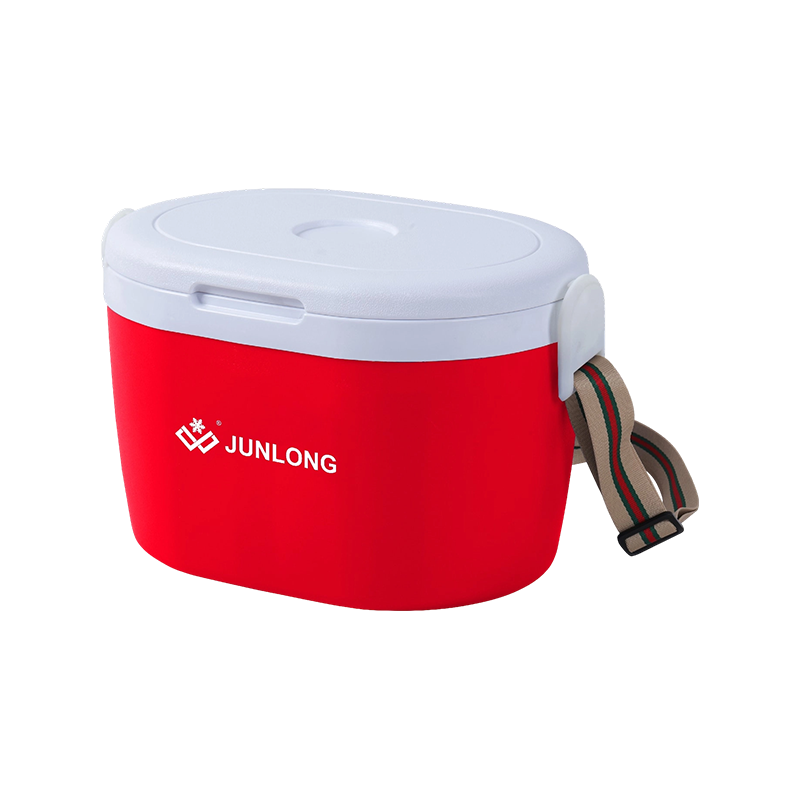
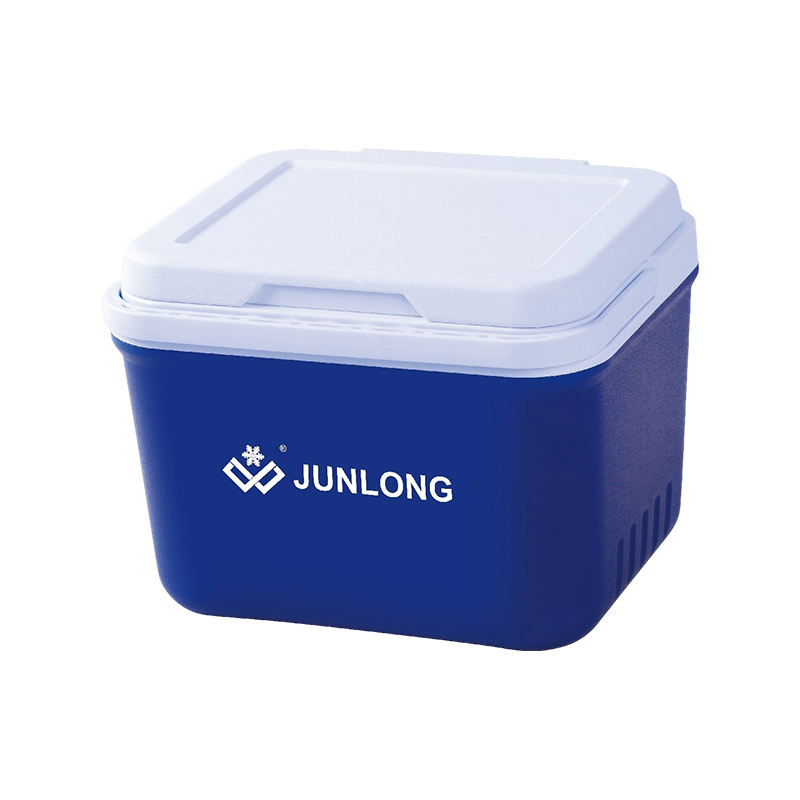 13L Insulated Cooler Box with PU Foam InsulationA compact 13-litre cooler for packed lunches and two-to-three-person outings, with PU insulation, PP lining, and a built-in handle.View Product →
Medium containers, 15 to 38 litres
Family days, tailgates and small crews sit here. A 15 to 20 litre box covers four to six meals with drinks, and 24 to 38 litres covers eight to fifteen portions. Wheels and telescopic handles start to make sense above roughly 25 litres, because a loaded box can weigh between 15 and 25 kilograms once ice packs and bottles are added. Two side handles distribute that weight better than one central grip when the box has to be lifted into a truck bed.
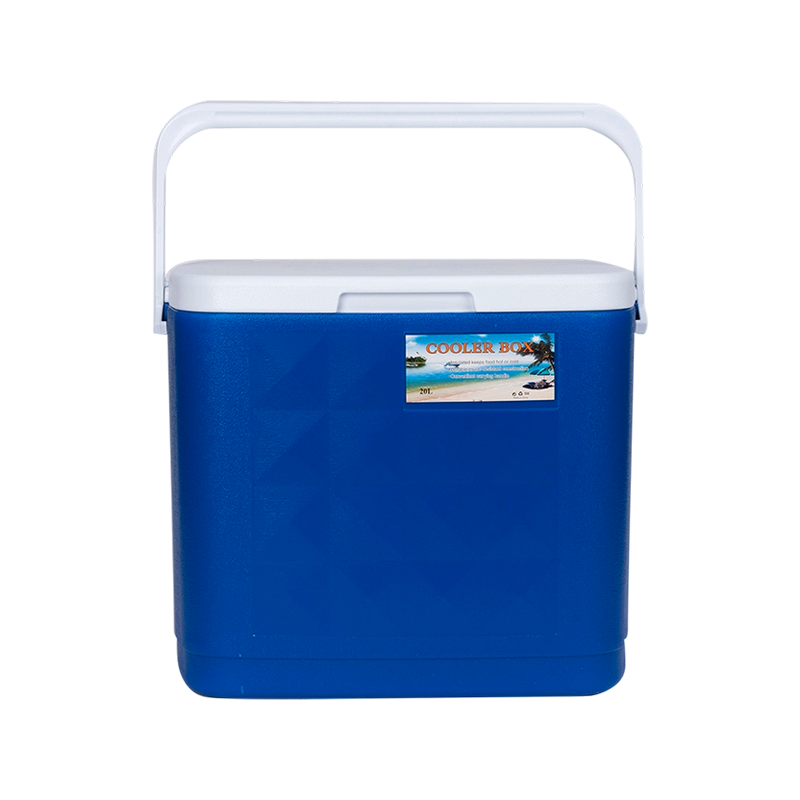 20L Daily Use Insulated Cooler Box with PU FoamA lightweight 20-litre cooler for four to six meals, featuring PE shell, PP lining, PU insulation, secure side lock, and integrated handle.View Product →
Large containers, 45 to 80 litres
Catering, fishing trips, market stalls and multi day camping use this tier. At this size the design questions change. Foam thickness, hinge strength and wheel diameter matter more than styling, and a drain plug becomes close to essential because melt water has to leave without tipping the whole box. Check the loaded weight against the handle rating, since an 80 litre box full of drinks and ice can pass 40 kilograms.
Do Not Forget the Drinks
Food and drink behave differently inside a cooler. Bottles and cans are dense, they roll, and they are opened far more often than the food compartment, so every opening costs cold air. Splitting the two jobs across two containers is usually cheaper than buying one oversized box, and it keeps the food lid shut during the hottest part of the day.
A cooler jug handles the drink side. These containers are tall and narrow, built around a sealing cover with a tap so water can be poured without lifting the jug. A 3.8 litre model is enough for a small crew and fits on a vehicle floor, while jugs up to 28 litres suit events and work sites.
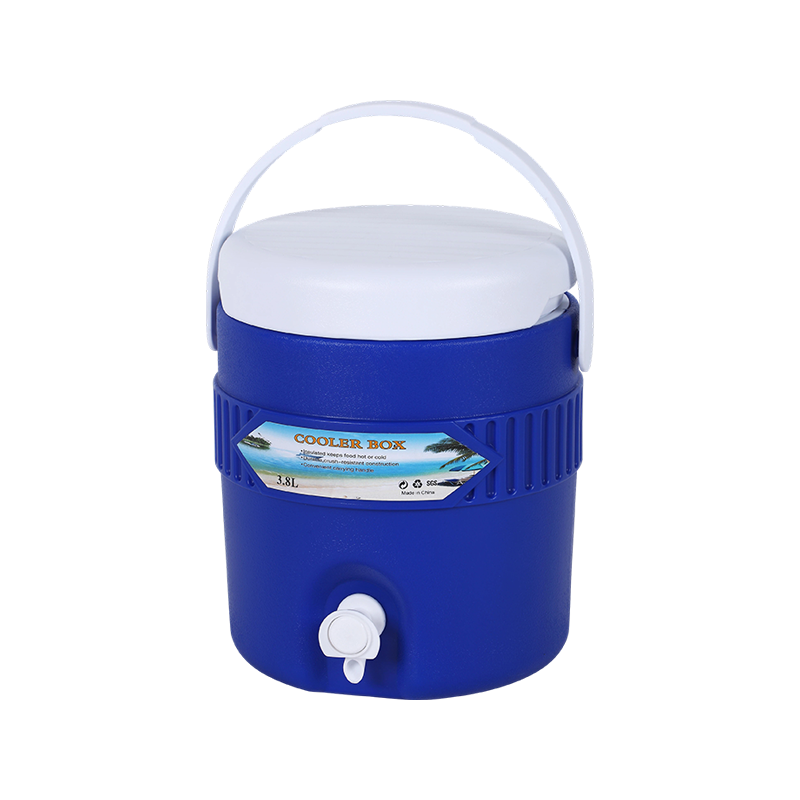 3.8L Portable Insulated Cooler Jug with Water FaucetA compact 3.8-litre drinks jug for small crews, with PU insulation, PP lining, leak-proof lid, tap, and ergonomic handle for picnics or vehicle floors.View Product →
One detail worth checking: the tap should sit above the base. A tap mounted flush with the bottom traps the last centimetre of liquid and is the first part to break when a full jug is set down hard.
What to Specify Before You Place an Order
For a distributor, an event supplier or a brand owner, the container is only half of the purchase. The other half is the specification, and small wording differences on a purchase order lead to large differences in what reaches the warehouse.
- Foam type and thickness. Injected PU foam insulates better and stays rigid longer than expanded polystyrene, and it survives repeated washing. State the thickness in millimetres and the tolerance you will accept.
- Lid and seal. Ask whether a gasket is included, how the latch is tested, and how much internal temperature swing is acceptable after an hour of opening and closing.
- Hardware. Hinges, handles, wheels and drain plugs fail first. Request a loaded lift and drop test result for the exact size you are buying, not for a smaller model in the same family.
- Branding and packaging. Colour matching, logo placement and retail packaging are the usual customisation points. Confirm the minimum order quantity for a custom colour separately from the standard colour minimum, because they are rarely the same.
- Quality control. Ask for the inspection points in the production flow and the test method behind any ice retention claim. A number without a method is a marketing line.
A supplier that moulds, foams and assembles under one roof can answer those questions directly, because the process steps are not spread across subcontractors. Buyers assessing that kind of vertical setup can review how the plant is organised before sending a drawing.
Buying Risks That Catch First Time Importers
- Buying by litres alone. Two boxes with the same label can differ by 15 percent in usable cavity once wall thickness is counted.
- Sampling a small size and ordering a large one. Hinge load, wheel diameter and foam distribution change with volume, so the sample has to match the size on the order.
- Skipping the seal check. A latch that opens under a full load spills a day of food and creates exactly the return you were trying to avoid.
- Ignoring spare parts. Lids, taps and handles are the parts customers ask for later. Confirm they can be supplied separately.
The alabama lunch bag search ends where it started. Pick a rigid, foam insulated container sized to the meals it will carry, put the drinks in a cooler jug, and check the seal before the season begins rather than in the middle of it. Sharing a target capacity, a drawing or a sample is the fastest route to a usable quotation and a realistic lead time, and the contact page is the place to start that conversation.
Product Recommendation

link
Office
- TEL: +86-574-63787606
- Phone: +86-13777994798
- E-mail: sales@nbjunlong.com
- WhatsApp: 13777967488
- Address: No. 1, Lane 3, Development Road, Longtouchang, Longshan Town, Cixi City, Zhejiang Province, China
Get In Touch
Copyright © Ningbo Junlong Outdoor Products Co., Ltd. All Rights Reserved.
China Plastic Insulated Cooler Box Manufacturer Custom Cooler Box Supplier
