- SMALL ORDERS FOR STANDARD ITEMS. Contact Now
- OUTDOOR COOLING SOLUTIONS, MADE IN‑HOUSE. Contact Now
- COOLER BOXES THAT FIT REAL OUTDOOR LIFE. Contact Now

 LANGUAGE
 日本語
日本語 Español
 عربى
عربى
Content
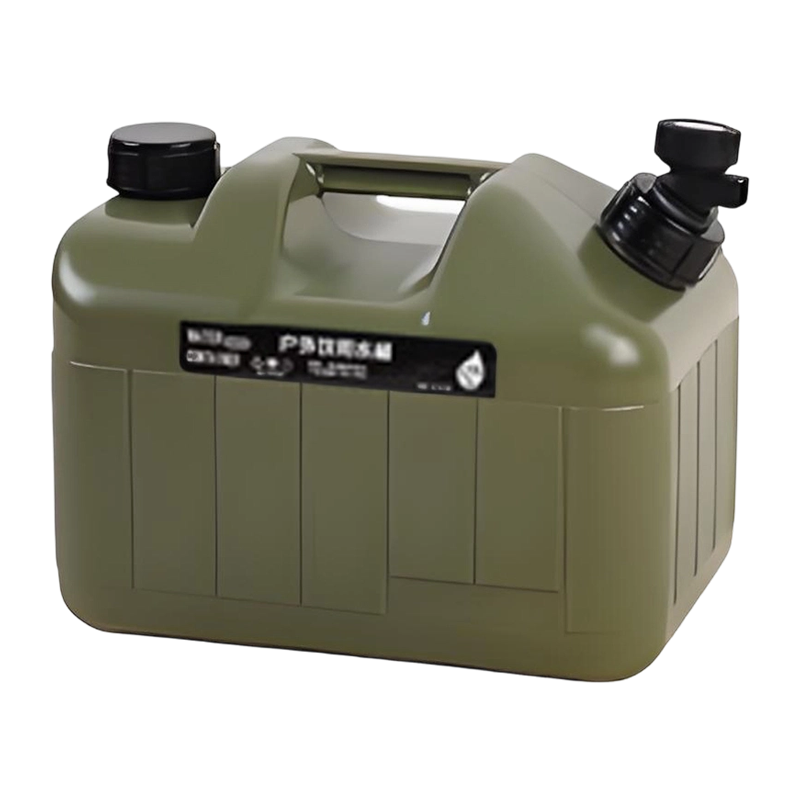
An Outdoor Water Container is a durable, sealed vessel designed to store, transport and dispense drinking water in settings where no running water supply is available, such as campsites, jobsites, vehicles, boats and emergency preparedness storage. Unlike a household water pitcher, it is built to withstand rough handling, temperature swings and outdoor exposure while keeping water clean and accessible through a secure lid, cap or spigot. How much water this container actually needs to hold comes down to a well established planning figure: FEMA, the CDC and the American Red Cross all recommend storing at least one gallon of water per person per day as a baseline for drinking, food preparation and basic hygiene, which is the starting point most outdoor water container sizing decisions are built around.
What Separates an Outdoor Water Container From a Regular Bottle
The core distinction is durability and capacity built for conditions a standard water bottle was never designed to handle. An outdoor water container typically uses food grade, UV stable plastic or stainless steel construction, a wide mouth opening for easy filling and cleaning, and a secure closure system, whether a screw cap, pressure fit lid or integrated spigot, that resists leaking during transport in a vehicle, boat or backpack. Capacity is also a defining feature, with most outdoor water containers ranging from 1 gallon collapsible designs meant for backpacking up to 5 or 7 gallon rigid containers meant for a jobsite, campsite or emergency water reserve.
How Much Water You Actually Need to Plan For
Sizing an outdoor water container starts with understanding realistic daily water needs, which shift depending on activity level, climate and trip length. The one gallon per person per day baseline used by FEMA and the CDC breaks down to about half a gallon for drinking and food preparation and another half gallon for hygiene related uses such as hand washing and teeth brushing. Camping and backcountry guidance generally recommends going beyond that baseline for active outdoor use, since strenuous activity and heat both increase water loss significantly.
Daily Water Planning Reference
| Scenario | Recommended Amount Per Person | Source Guidance |
| Emergency Storage, Mild Conditions | 1 gallon per day | FEMA and CDC baseline recommendation |
| Emergency Storage, Hot Climate | 1.5 to 2 gallons per day | FEMA and preparedness guidance for extreme heat |
| General Camping | 2 gallons per day | Backcountry planning guidance for car camping |
| Strenuous Hiking or Climbing | 2 to 3 gallons per day | Backcountry planning guidance for heavy exertion |
For a two week emergency water supply, this baseline scales quickly, with FEMA style planning figures putting the target at 14 gallons per person at the minimum one gallon per day rate, meaning a household of four should plan for roughly 56 gallons of stored water at minimum, and more if hot climate or activity adjustments apply.
Common Uses for an Outdoor Water Container
Because the core function of an outdoor water container is reliable, portable water access away from a tap, it shows up across a wide range of settings with different priorities for size, portability and durability.
- Camping and overlanding, where a container supplies drinking, cooking and cleaning water for a multi day trip
- Jobsites and outdoor work crews, where a central container supports hydration requirements across a shift
- Boats and marine use, where fresh water access is otherwise limited or unavailable
- Emergency and disaster preparedness, where stored water covers a household through a water main disruption or natural disaster
- Off grid living and vehicle based travel, where a container serves as a mobile water reserve between refill points
Container Types and How to Choose Between Them
Outdoor water containers generally fall into a few common formats, each suited to different priorities around portability, capacity and storage space.
Rigid Jerry Can Style
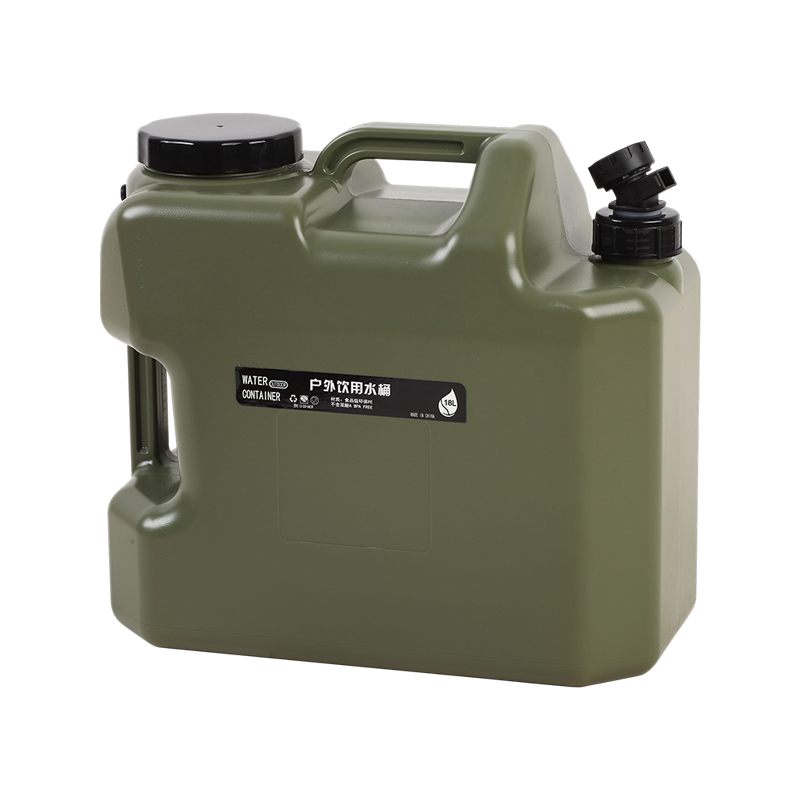
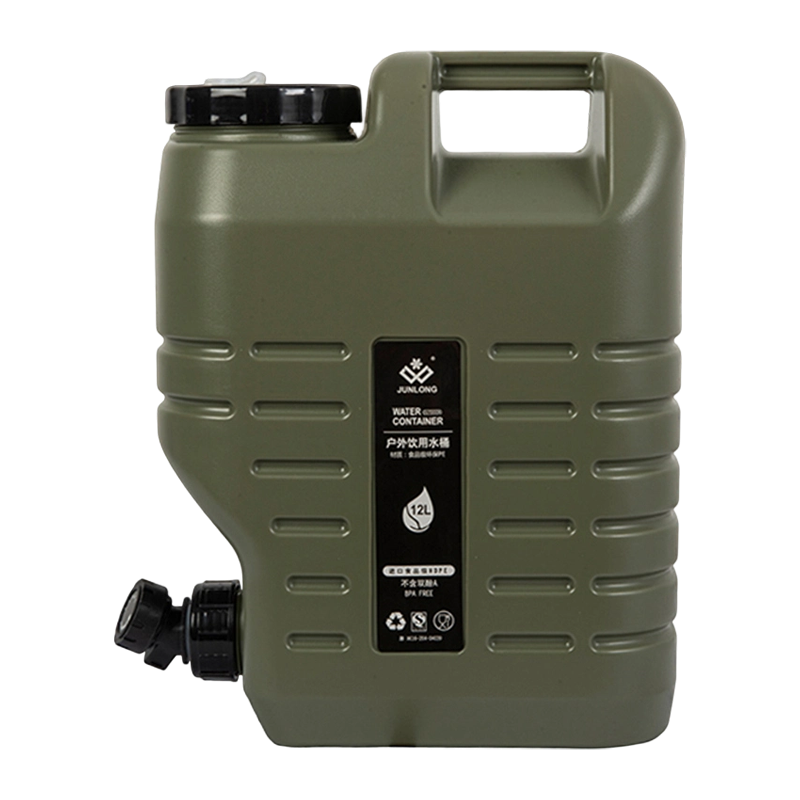
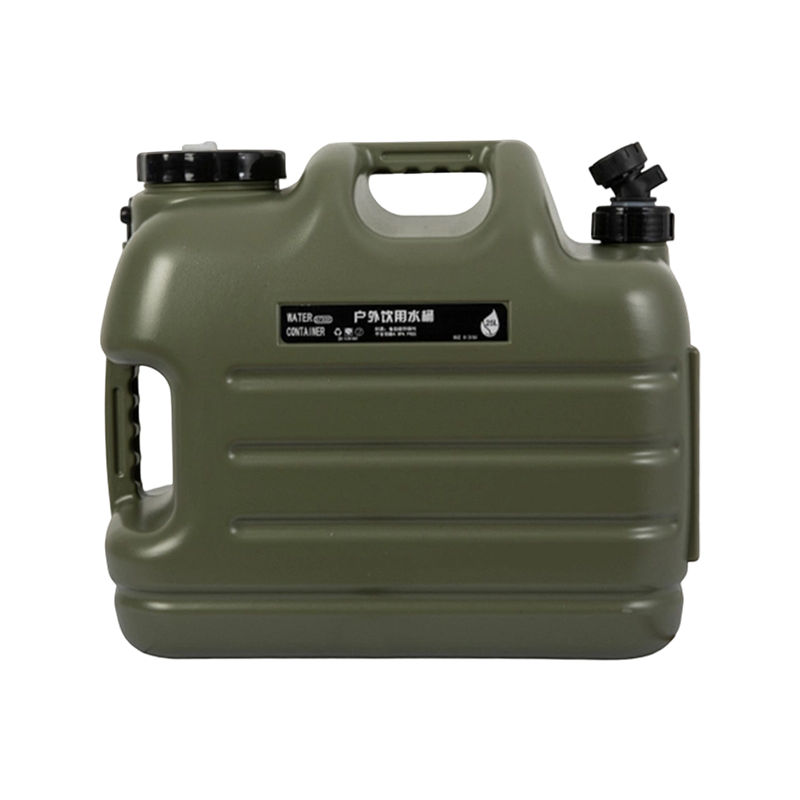
Stackable, rigid containers with a handle and secure cap are the most common design for vehicle based storage, camping and jobsite use, since their flat sides make efficient use of truck bed, trunk or storage compartment space. These are typically available in 5 to 7 gallon capacities suited to a small group or family over a multi day trip.
Collapsible or Foldable Containers
Foldable water containers compress flat when empty, making them useful for backpacking, emergency kits and any situation where storage space is limited until the container is actually needed. The tradeoff is generally lower puncture resistance compared with rigid designs, making them better suited to controlled use rather than rough jobsite handling.
Spigot Equipped Dispensers
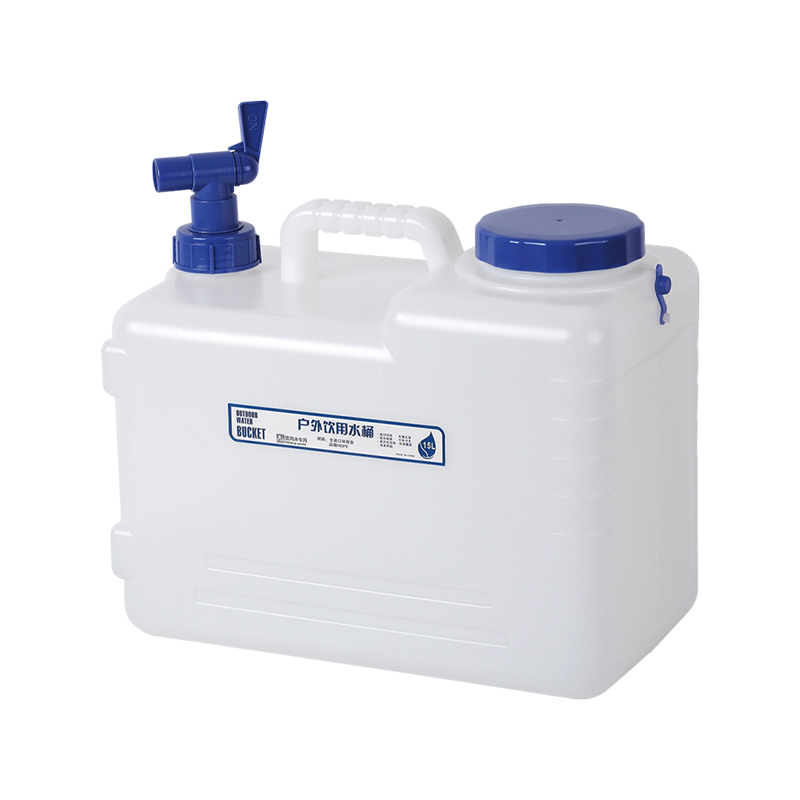
Containers built with an integrated spigot or tap are designed for group access, letting multiple people fill cups or bottles without opening a cap each time. This format is common for jobsite hydration stations, campsite base areas and group events where frequent, low effort refills matter more than portability.
Water Storage and Rotation Best Practices
Buying the right container is only part of the equation, since stored water quality depends on how the container is filled, sealed and maintained over time. Preparedness guidance consistently recommends using food grade containers specifically designed for water storage, since containers not rated for drinking water can leach chemicals or harbor bacteria over extended storage periods. For long term emergency storage, water should be rotated periodically, kept sealed and stored away from direct sunlight and chemical fumes, both of which can degrade water quality even in a well built container.
- Use only food grade, BPA free containers rated specifically for drinking water storage
- Clean and sanitize the container before the first fill and periodically during long term storage
- Store filled containers in a cool, shaded location away from direct sunlight
- Rotate stored water on a regular schedule, particularly for emergency reserves kept for months at a time
- Label containers with fill dates to track rotation schedules across multiple units
Sizing Your Container to Your Group and Trip Length
Matching container capacity to group size and trip duration avoids the two most common mistakes: running out of water mid trip or hauling far more weight than the trip actually requires. A single 5 gallon Outdoor Water Container covers roughly two and a half days of baseline drinking water for one person at the FEMA minimum, or about one day for a family of five, which makes multi container setups or larger capacity units necessary for longer trips or bigger groups. Weight is also a practical constraint worth planning around, since a full 5 gallon container weighs around 40 pounds, meaning portability and handle design become just as important as raw capacity for any container that needs to be carried rather than left in a vehicle or at a base camp.
An outdoor water container exists to solve one specific problem: keeping a reliable, protected water supply available anywhere a tap is not, from a weekend campsite to a multi week emergency preparedness plan. Getting the size right starts with the well established one gallon per person per day baseline from FEMA and the CDC, adjusted upward for heat, activity level or group size, while getting the container type right depends on whether portability, group access or vehicle storage efficiency matters most for the specific use case. A properly sized and well built Outdoor Water Container turns water planning from a source of stress into a simple, repeatable part of any camping trip, jobsite setup or household emergency plan.
Product Recommendation
link
Products
Office
- TEL: +86-574-63787606
- Phone: +86-13777994798
- E-mail: sales@nbjunlong.com
- WhatsApp: 13777967488
- Address: No. 1, Lane 3, Development Road, Longtouchang, Longshan Town, Cixi City, Zhejiang Province, China
Get In Touch
Copyright © Ningbo Junlong Outdoor Products Co., Ltd. All Rights Reserved.
China Plastic Insulated Cooler Box Manufacturer Custom Cooler Box Supplier
