- SMALL ORDERS FOR STANDARD ITEMS. Contact Now
- OUTDOOR COOLING SOLUTIONS, MADE IN‑HOUSE. Contact Now
- COOLER BOXES THAT FIT REAL OUTDOOR LIFE. Contact Now

 LANGUAGE
 日本語
日本語 Español
 عربى
عربى
Content
A Cooler Box keeps food cold by combining insulated walls that slow heat transfer with a sealed lid that traps cold air inside, allowing ice or ice packs to melt slowly over time instead of all at once. The insulation, typically rigid polyurethane foam injected between an inner and outer plastic shell, acts as a barrier against the surrounding warm air, while the airtight seal around the lid prevents cold air from escaping and warm air from seeping in. The combination of these two factors is what allows a well-built cooler to maintain safe food temperatures, generally below 40 degrees Fahrenheit, for anywhere from a few hours to several days depending on the insulation thickness and ambient conditions.
The role of insulation thickness
Insulation thickness is the single biggest factor separating a basic cooler from a high-performance one. Thin-walled coolers found in budget models typically use less than 1 inch of foam, which allows heat to penetrate quickly and can reduce ice retention to under 24 hours in warm weather. Premium roto-molded coolers often use 2 to 3 inches of polyurethane foam insulation, which slows heat transfer enough to maintain ice for several days, a specification commonly listed in manufacturer ice-retention testing published by outdoor gear review outlets such as OutdoorGearLab.
| Cooler type | Typical wall thickness | Average ice retention |
| Basic foam cooler | 0.5 to 1 inch | 1 to 2 days |
| Standard hard-sided cooler | 1 to 1.5 inches | 3 to 4 days |
| Roto-molded heavy-duty cooler | 2 to 3 inches | 5 to 7 days |
Why the seal matters as much as the insulation
Even the thickest insulation cannot compensate for a poor seal, since gaps around the lid allow warm air to continuously flow in and cold air to escape. High-performance coolers use a gasket, often made of rubber or a compressible foam strip, that compresses when the latches are closed to create an airtight barrier. Testing by outdoor safety researchers has shown that a cooler with a compromised seal can lose ice retention efficiency by more than 50 percent compared to an identical model with an intact gasket, which is why manufacturers recommend inspecting the lid seal for cracks or debris before every trip.
Latch design and pressure
Heavy-duty rubber latches pull the lid down tightly against the gasket, applying even pressure across the entire rim. Cheaper snap-style latches often apply uneven pressure, leaving small gaps at the corners where warm air infiltrates first.
Drain plug sealing
The drain plug is another common leak point. Threaded, gasket-lined drain plugs seal more reliably than simple push-in plugs, which can loosen during transport and slowly let cold air escape.
Material construction and its effect on cooling
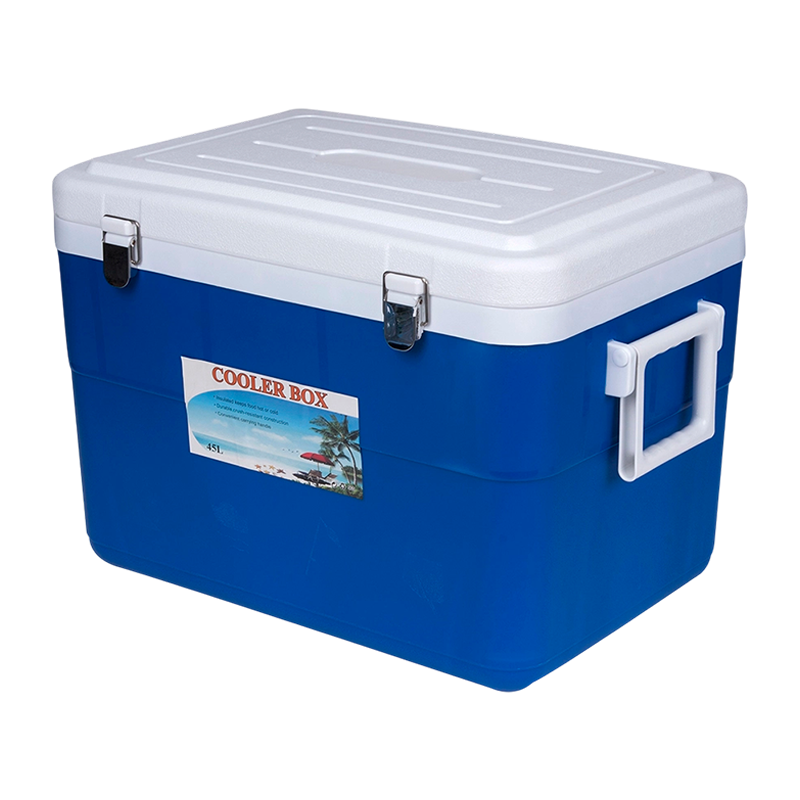
The outer shell material affects both durability and thermal performance. Rotomolded polyethylene shells create a single-piece, seamless structure with no weak points where heat can penetrate, while injection-molded coolers are typically assembled from separate panels that can develop small gaps over years of use. A quality Cooler Box from Junlong Outdoor uses rotomolded construction specifically to eliminate these seams, pairing it with UV-resistant outer material that prevents the shell from degrading and cracking under prolonged sun exposure, which would otherwise compromise the insulation layer beneath it.
- Rotomolded polyethylene: seamless single-piece shell, high impact resistance
- Injection-molded plastic: lighter weight, generally lower cost, more seams
- UV-stabilized additives: prevent shell brittleness and color fading from sun exposure
How ice-to-food ratio affects cooling performance
The amount of ice relative to the contents inside also plays a major role in how long a cooler stays cold. Packing experts commonly recommend a ratio of 2 parts ice to 1 part food and drinks by volume for multi-day trips, since a fuller cooler with less empty air space retains cold more efficiently than a partially loaded one. Block ice melts slower than cubed ice because it has less surface area exposed to warm air, making it a better choice for extended trips, while cubed ice cools contents faster initially but depletes sooner.
- Pre-chill the cooler and its contents before loading, since starting cold reduces the initial cooling workload.
- Use a mix of block ice on the bottom and cubed ice on top for both longevity and fast cooling.
- Pack the cooler as full as possible to minimize air space that speeds up warming.
- Keep the cooler out of direct sunlight and open the lid as infrequently as possible.
Environmental factors that reduce cooling time
External conditions can significantly shorten how long a cooler holds its temperature, regardless of build quality. Direct sunlight raises the external shell temperature, increasing the rate of heat transfer through even well-insulated walls. Frequent lid openings are one of the most underestimated factors, since each opening allows a burst of warm air to enter and cold air to escape; research from food safety organizations notes that repeated short openings can have a similar cumulative cooling loss as leaving the lid open continuously for several minutes. Placing a cooler on a hot surface such as pavement or a boat deck also transfers heat through the base, which is why elevating a cooler slightly or placing it on a reflective mat can help preserve ice longer.
Choosing the right cooler for your needs
Selecting the right cooler depends on matching insulation quality and size to how the cooler will actually be used. For short day trips or lunch coolers, a basic foam-insulated model is often sufficient and more affordable. For multi-day camping, fishing, or hunting trips where ice retention over several days is critical, a rotomolded cooler with thick insulation, a compression gasket seal, and secure latches offers significantly better performance. Reviewing manufacturer ice-retention test data and wall thickness specifications before purchase helps ensure the cooler chosen actually meets the demands of its intended use rather than underperforming when it matters most.
Product Recommendation
link
Products
Office
- TEL: +86-574-63787606
- Phone: +86-13777994798
- E-mail: sales@nbjunlong.com
- WhatsApp: 13777967488
- Address: No. 1, Lane 3, Development Road, Longtouchang, Longshan Town, Cixi City, Zhejiang Province, China
Get In Touch
Copyright © Ningbo Junlong Outdoor Products Co., Ltd. All Rights Reserved.
China Plastic Insulated Cooler Box Manufacturer Custom Cooler Box Supplier
