- SMALL ORDERS FOR STANDARD ITEMS. Contact Now
- OUTDOOR COOLING SOLUTIONS, MADE IN‑HOUSE. Contact Now
- COOLER BOXES THAT FIT REAL OUTDOOR LIFE. Contact Now

 LANGUAGE
 日本語
 Español
 عربى

Content
You have twelve cans of drinks, a bag of ice, and a two-mile walk to the picnic spot. The cooler you reach for has to do two jobs at once: keep the drinks cold and let you carry it like a backpack. A 12 can backpack cooler is not just a smaller box with straps. It needs an internal volume that actually fits the cans, insulation that holds up for several hours, and a harness that keeps the weight stable on your body. This guide walks through the decisions that matter most, and explains how those decisions look from a manufacturer's point of view.
Why the 12-Can Benchmark Is a Useful Starting Point
Twelve cans is a realistic load for a solo day trip, a couple sharing a sunny afternoon, or a short fishing outing. But the number describes the liquid volume, not the physical space the cans take up inside a cooler. Twelve standard 355-ml cans hold about 4.3 liters of liquid. With rounded corners, can shape, and the need for ice or a reusable ice pack, the interior volume should be larger. Most practical 12-can backpack coolers fall in the 10- to 14-liter range.
| Load | Internal Volume Needed |
|---|---|
| 12 x 355 ml cans | 10 to 14 L |
| 12 x 500 ml bottles | 12 to 16 L |
| 12 cans plus a small ice pack | 14 to 18 L |
| 24 cans in two layers | 18 to 25 L |
When a product page says "12 can", check the internal volume in liters as well. A thin soft shell that relies on zippers can look bigger from the outside, while a hard foam cooler with the same volume may feel more compact. The key is the usable storage space, not the external footprint.
Core Features to Evaluate Before You Buy
Four features separate a comfortable 12-can backpack cooler from one that spends most of its time in the car trunk: insulation quality, sealing, carrying system, and bottom protection.
Insulation Type and Foam Thickness
Most hard foam coolers use polyurethane foam that expands into the gap between the inner liner and outer shell. This foam fills corners that rigid board insulation cannot reach, so cold air has fewer escape routes. A thicker foam wall improves ice retention but also adds weight. For a 12-can load, a good balance is a wall that keeps drinks cold for a full day without turning the empty cooler into a heavy anchor. When you compare models, ask for the internal wall thickness and foam density. A serious manufacturer will share those numbers.
Sealing and Lid Design
The lid is the weakest point of any small cooler. A tight-fitting gasket and a latch that presses the lid down evenly make a noticeable difference. Backpack-style coolers get knocked sideways on trails, so a leak-resistant seal matters even more. Hard foam coolers usually have simple hinge or detachable lids that are easy to wipe clean. Soft backpack coolers use zippers, which tend to fail after heavy use. For a 12-can cooler that you may toss into a boat or lean against a tree, a hard shell with a gasket is often the safer choice.
Carrying System and Real Weight
A full 12-can cooler weighs more than people expect. Twelve cans of liquid weigh about 4.3 kg, adding ice brings that to 5 or 6 kg, and the cooler shell adds its own mass. A typical loaded 10- to 14-liter cooler weighs 8 to 10 kg. That is too much for an unpadded nylon strap. Look for wide shoulder straps, a chest strap to keep the pack stable, and a back panel that does not trap heat against your spine. The best way to test this is to put weight inside the cooler and walk around a store for five minutes. If you are ordering online, check the empty weight and strap width before you commit.
Base and Exterior Details
Small details determine how well a cooler survives real trips. A non-slip base stops it sliding around on a boat seat or the back of an SUV. A drain plug makes it easier to empty melted ice without tilting the whole pack. Cup holders in the lid are convenient for keeping drinks within reach, and side handles help when you need to lift the cooler out of a car at the end of the day. These are not gimmicks; they become important during use.
How to Match Capacity to Your Trip
The ideal capacity depends on how many people you are carrying for and how long the ice needs to last. For a solo hike or a picnic for two, a 10- to 14-liter cooler is the sweet spot. For a family outing, go up to 18 liters or more. For a full day of fishing where you also need sandwiches and fruit, consider a 14- or 18-liter model with a wide opening.
One example is a 14-liter shoulder-strap cooler with a cup holder, foam insulation, and a compact shape. It sits in the 12-can range without forcing you to carry an oversized box.
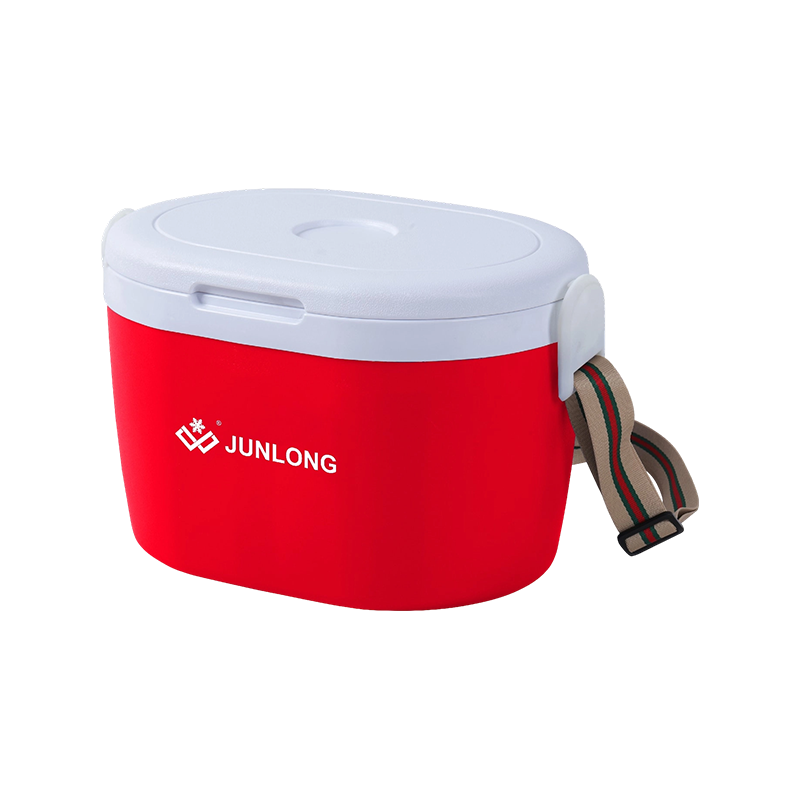 14L Shoulder Strap Cooler with Cup Holder and Foam InsulationThis compact 14-liter cooler features a detachable shoulder strap and top handle for flexible carrying. The recessed latch enables one-handed opening, while the built-in cup holder keeps drinks within reach. Its foam insulation and food-grade liner suit short trips and commuting.View Product →
If you plan to carry the cooler more than 500 meters, favor a backpack-style harness over a single hand strap. If you mostly drive to a campsite and walk a short distance, a simple handle may be enough. Think about the whole trip, not just the moment when the cooler is full and cold.
What a Manufacturer Looks for in Production
Behind a good 12-can backpack cooler is a production process that keeps foam walls uniform and seals consistent. The most reliable way to achieve that is to control the whole chain in house. Injection molding forms the outer shell, foaming fills the cavity with insulation, and assembly attaches the hinges, latches, and straps. When one factory handles all three stages, defects become easier to catch and tolerances are easier to maintain. This is the approach that Ningbo Junlong describes on its company overview page.
For buyers, in-house production matters because quality problems in a cooler tend to show up slowly. A small air gap in the foam may not matter on day one, but it will shorten ice retention by the third month. A poorly aligned latch may leak only when the cooler is full and tipped. When you ask a factory about their manufacturing process, pay attention to whether they mention quality control during foaming and assembly, not just the final product test.
Practical Care and Maintenance
Even a well-built 12-can backpack cooler loses efficiency if it is not cleaned and stored properly. Wash the inside with warm water and a mild detergent after each trip. Dry it with the lid open before closing for storage. Avoid placing hot items directly on the inner liner, and do not use abrasive cleaners that scratch the surface.
- Drain melted ice through the plug or by tilting the cooler, then wipe the seal dry.
- Store the cooler with the lid slightly open to prevent mold and odor.
- Check the foam density and gasket condition before the start of each season.
- Keep the cooler out of direct sunlight for long periods, because UV exposure can make plastic brittle.
If the strap or cup holder is replaceable, buy spare parts from the same manufacturer. Extending the life of a cooler reduces both cost and waste, which is also better for the environment.
Final Checklist and Next Step
Before you buy or source a 12-can backpack cooler, run through a short checklist. Confirm the internal volume in liters, not just the can count. Compare the insulation material and wall thickness. Check the gasket and lid seal. Weigh the empty cooler and inspect the shoulder strap width and padding. Think about drainage, cleaning, and how the cooler will sit when you are walking.
If you are buying for yourself, the right choice balances cold retention with comfort. If you are sourcing for a brand or store, the same criteria apply at a bigger scale, plus you need to verify MOQ, custom colors, logos, and packaging. A good factory will answer questions about foam density, plastic grade, and test methods before talking price.
Start with your capacity target, ask for the specification sheet, and request a sample if possible. A 12-can backpack cooler is a small product, but the decisions behind it affect every trip it goes on. Contact the JUNLONG team through the contact page to discuss your exact requirements.
Product Recommendation
link
Office
- TEL: +86-574-63787606
- Phone: +86-13777994798
- E-mail: sales@nbjunlong.com
- WhatsApp: 13777967488
- Address: No. 1, Lane 3, Development Road, Longtouchang, Longshan Town, Cixi City, Zhejiang Province, China
Get In Touch
Copyright © Ningbo Junlong Outdoor Products Co., Ltd. All Rights Reserved.
China Plastic Insulated Cooler Box Manufacturer Custom Cooler Box Supplier
