- SMALL ORDERS FOR STANDARD ITEMS. Contact Now
- OUTDOOR COOLING SOLUTIONS, MADE IN‑HOUSE. Contact Now
- COOLER BOXES THAT FIT REAL OUTDOOR LIFE. Contact Now

 LANGUAGE
 日本語
 Español
 عربى

Content
Packing a cooler the night before a trip and finding lukewarm drinks by lunch is usually an ice pack problem, not a cooler problem. The best ice pack for coolers is the one that matches your box in three ways: it covers enough of the interior floor to chill the whole load, it freezes cold enough for the hours you plan to be outside, and it can be refrozen in the freezer space you actually have at home. Get those three right and a mid range cooler will outperform an expensive one loaded with the wrong packs.
Contact beats brand, thermal mass beats thickness, and a cooler with dense foam walls keeps the cold a pack releases inside the box instead of leaking it into the air. That is the order of importance this guide follows.
What Separates a Good Ice Pack from a Poor One
Ice packs look almost identical on a shelf, so the differences have to be judged on numbers and construction rather than on packaging claims.
- Contact area. A flat pack sitting flush against the cooler floor or wall chills a load faster than a round bottle that touches along a single line.
- Thermal mass. Weight is the most honest indicator of stored cold. A 1000 g hard block carries about twice the cooling energy of a 500 g pouch of the same gel.
- Freeze point. Standard water based gel freezes near 0 degrees Celsius. Eutectic packs hold a set temperature such as minus 12 degrees Celsius, which matters when a specific holding temperature counts more than raw cold.
- Thickness versus footprint. Thin packs freeze quickly and stack neatly, while thick blocks hold cold longer for the floor space they take. Most coolers do best with one thick block plus two thin packs.
- Seal quality. Double sealed edges and a film that stays flexible when frozen separate a reusable pack from a leak that soaks everything around it.
- Refreeze time. A large block can need 24 hours or more at minus 18 degrees Celsius. In a crowded freezer, several small packs are ready sooner.
Ice Pack Types and Where Each One Wins
There is no single best ice pack for every cooler, because the right choice depends on trip length, the temperature you need to hold, and how much freezer space you have.
| Ice pack type | How it behaves | Best for | Watch out for |
|---|---|---|---|
| Hard gel block | Freezes solid, releases cold slowly, stays rigid | Multi day trips and larger coolers | Needs 24 hours or more to refreeze, heavy |
| Soft gel pouch | Freezes flexible, wraps around bottles and gaps | Lunch boxes, small coolers, filling voids | Thaws faster, seams can split |
| Frozen water bottle | Freezes hard, meltwater stays drinkable | Short trips and day hikes | Round shape leaves gaps, condensation |
| Eutectic panel | Holds a set temperature for many hours | Long transport and temperature sensitive loads | Higher cost, needs a specific freezer setting |
| Dry ice | Sublimates and runs far colder than water ice | Trips of two days or more | Ventilation and handling, not suitable for every liner |
Matching Ice Pack Size to Cooler Capacity
Capacity tiers are the practical starting point. Cooler boxes are usually grouped into small (5 to 13 litres), medium (15 to 38 litres) and large (45 to 80 litres), and the ice pack load scales with each step.
In a small box, one 400 to 800 gram hard pack laid flat on the bottom plus one thin pouch against the lid covers a day trip. The pack should cover at least half of the interior floor, otherwise cold air pools in one corner and the far end of the box stays warm.
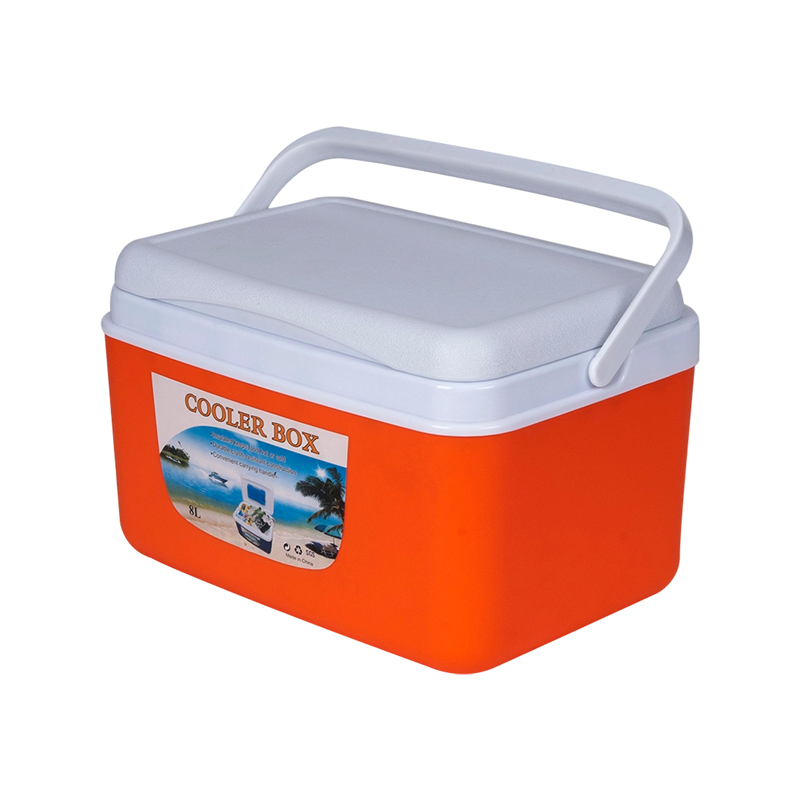 8L Portable Cooler Box with Built-In Lid Ice PackFor small day-trip coolers, this 8 L box has a built-in lid ice pack and up to 36 hours insulation.View Product →
For medium boxes, plan on two or three 1000 gram packs, or one large block plus two pouches. This is the range where an ice pack slot or lid compartment earns its place, because it keeps the packs pressed against the wall of the box instead of sliding under the sandwiches.
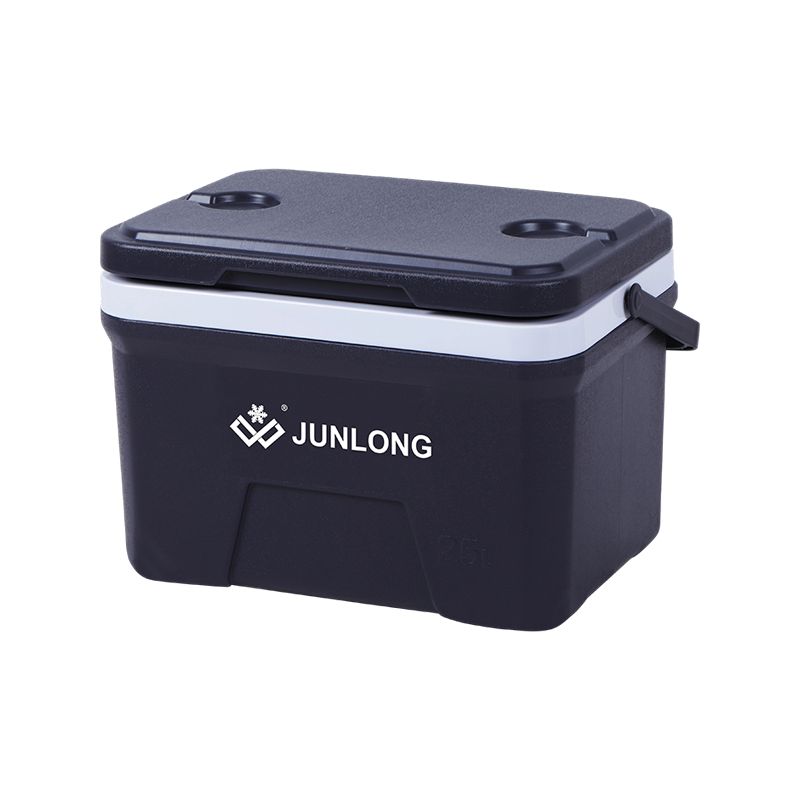 25L Insulated Cooler Box with Lid Ice Pack CompartmentFor medium-capacity outings, this 25 L cooler uses a dedicated lid ice pack slot and offers 48-hour insulation.View Product →
In a large cooler you are looking at four to six kilograms of packs spread along both long walls and the floor. A single block in a 60 litre box chills the area around it and leaves the rest of the load at ambient temperature, which is why large capacity models are usually specified with a dedicated compartment rather than a loose pack.
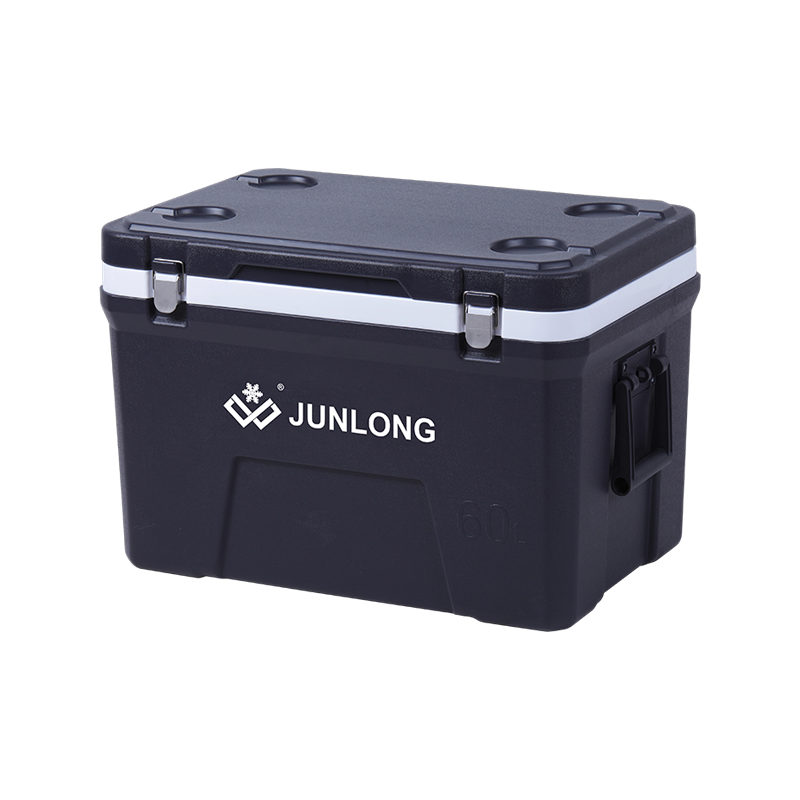 60L Rugged Cooler Box with Dedicated Ice Pack CompartmentFor large-capacity trips, this 60 L rugged cooler has a dedicated lid ice pack slot and 48–60 hour cooling.View Product →
A defined ice pack slot is a small feature that changes daily use more than any other. Packs stay put when the box is carried, the food area stays dry, and the cooler can be loaded and unloaded without juggling frozen blocks.
Why the Cooler Matters as Much as the Ice Pack
An ice pack only slows the warming of its surroundings. The cooler decides how quickly outside heat gets in, and wall thickness, foam density and lid seal do that work. Polyurethane foam in a moulded liner holds cold noticeably longer than a thin single wall shell, and a lid that closes with light pressure and no rattle stops cold air escaping through the gap.
Packing habits count for just as much. Chill the box before loading, keep the drain closed, fill empty space with a towel or extra drinks, and open the lid as rarely as you can. On a hot day, a cooler left in the shade with a blanket over the lid gains hours of holding time.
Material selection decides much of that performance, from the food contact liner to the foam doing the insulating. Buyers who want to see how those choices are made can read this note on why material choice decides peace of mind.
How Many Ice Packs Do You Actually Need
Rules of thumb are not exact, but they get you close enough to pack confidently.
- Use roughly 1 kg of ice pack for every 1 to 1.5 kg of food and drink in a decent insulated box.
- Packs should fill about one third of the internal volume when the cooler is fully loaded.
- Add around 25 percent more cooling capacity for every 10 degrees above 25 degrees Celsius.
- For trips longer than 24 hours, use hard blocks rather than pouches and freeze them for a full 48 hours beforehand.
- For a two day trip, doubling the pack weight is cheaper and more reliable than buying a bigger cooler.
Sourcing Coolers and Ice Packs for Resale
For importers, retailers and brand owners, ice pack compatibility is a specification rather than an afterthought. Buyers now ask for a defined slot depth, interior dimensions stated in millimetres, and a lid that holds a pouch without pinching the seal. Tolerance matters: a slot 3 mm too shallow will not accept a standard 30 mm gel block, and a slot that is too deep lets the pack rattle until the film cracks.
This kind of detail is easier to control when moulding, foaming and assembly happen in one facility. Our capacity tiers of 5 to 13 litres, 15 to 38 litres and 45 to 80 litres exist so a buyer can match a mould to a market quickly, and standard items can be ordered in small quantities before committing to a full container. Colour, logo and packaging changes are handled as custom work from drawings or samples. More on the factory and how orders are run is on the about page.
Care and Reuse
- Freeze flat so the pack keeps a uniform thickness and stacks well.
- Leave headroom in refillable packs for expansion.
- Check seams and film after every freeze, and retire any pack that has started to bulge.
- Refreeze for the full recommended time, since a half frozen pack underperforms noticeably.
- Store packs dry to prevent mould forming on the outer film.
Common Questions
Is a heavier ice pack always better?
Not always. In a 5 litre box a 1500 gram block takes up space the food needs and may not refreeze fully between trips. Match weight to volume rather than buying the largest pack on the shelf.
Can frozen water bottles replace gel packs?
Yes for short trips, and the meltwater is drinkable. The trade off is shape, because a round bottle touches the cooler along one line and chills a load more slowly than a flat pack of the same weight.
Should packs go on top or at the bottom?
Cold air sinks, so a pack on the floor does more work than the same pack on top. For a full box, one layer on the bottom and one pouch against the lid gives the most even result.
Choosing the best ice pack for coolers comes down to fit and capacity rather than brand. Cover the floor, match pack weight to the volume of the box, freeze everything long enough, and keep the lid shut. That combination holds temperature better than any single premium pack dropped into an unprepared cooler.
If you are specifying coolers with ice pack compartments for a retail programme, share the target capacity, the pack dimensions you intend to use and the market you sell into, and the configuration can be matched to a mould and a quote.
Product Recommendation
link
Office
- TEL: +86-574-63787606
- Phone: +86-13777994798
- E-mail: sales@nbjunlong.com
- WhatsApp: 13777967488
- Address: No. 1, Lane 3, Development Road, Longtouchang, Longshan Town, Cixi City, Zhejiang Province, China
Get In Touch
Copyright © Ningbo Junlong Outdoor Products Co., Ltd. All Rights Reserved.
China Plastic Insulated Cooler Box Manufacturer Custom Cooler Box Supplier
