- SMALL ORDERS FOR STANDARD ITEMS. Contact Now
- OUTDOOR COOLING SOLUTIONS, MADE IN‑HOUSE. Contact Now
- COOLER BOXES THAT FIT REAL OUTDOOR LIFE. Contact Now

 LANGUAGE
 日本語
 Español
 عربى

Industry News
Best Cooler for Golf Bag: Fit, Capacity, Weight, and Buying Tips for Golfers
Content
Hole fourteen. Mid-afternoon heat. The drink you dropped into your bag pocket back on hole three has gone warm, and your playing partner just pulled an ice-cold can out of the cart basket. That gap is rarely about insulation technology. It is about size and how the cooler sits. Picking a cooler for a golf bag comes down to two things: it has to fit where you actually put it, and it has to stay upright while you play.
The short answer first. For most golfers, a rigid foam-insulated cooler between 5L and 9L does the job best. Models with a shoulder strap or a molded handle beat flat boxes, because they hang from a cart handle or rest against the side of a stand bag. Anything above 13L shifts around in a cart basket and gets heavy across eighteen holes. Insulation quality matters, but it ranks behind whether you will actually carry the thing.
Why most coolers fail inside a golf bag
A standard cooler is designed around a car trunk and a picnic table, not a cart basket. Four conflicts show up again and again.
- Footprint. A 20L cooler is often 35 to 45 centimeters wide. Most cart baskets give you 25 to 30 centimeters of usable width, so the box either wedges in sideways or hangs out of the front.
- Shape. Square bodies with flat bases tip over as soon as they meet a slanted bag pocket or a bumpy fairway. Rounded containers with a strap sit tight against a bag or a body.
- Weight. A large box with hard PU foam and a thick shell can weigh 3 to 5 kilograms empty. Add drinks and ice and it becomes a chore on a push cart and impossible on your shoulder.
- Lid access. Top-loading lids inside a basket force you to lift the whole box out to open it. A side-access jug or a screw-top container lets you pour or grab without moving anything.
If you only carry a handful of cans and a little ice, a cooler sized for a refrigerator is wasted space. Size it for the basket instead.
Where golfers actually put a cooler
Decide the carrying method before you decide the capacity. Four positions set very different limits.
- Cart basket. Usable width is usually around 25 to 30 centimeters with roughly 20 centimeters of depth. A 5L to 9L body sits in that space without crowding the scorecard or gloves.
- Cart handle. Hung by a hook or a strap. Keep the loaded weight near 2 to 3 kilograms, or the cart starts to feel unbalanced when you turn.
- Bag side pocket. Only slim containers belong here, and they must seal. A leak in this position means water pooling at the bottom of the bag, near grips and spare clothing.
- Carried by hand or on a shoulder. For a walking round, target 2 kilograms total including contents.
If you rotate between these positions, choose a small body with a detachable shoulder strap plus a molded handle. That combination covers the most situations.
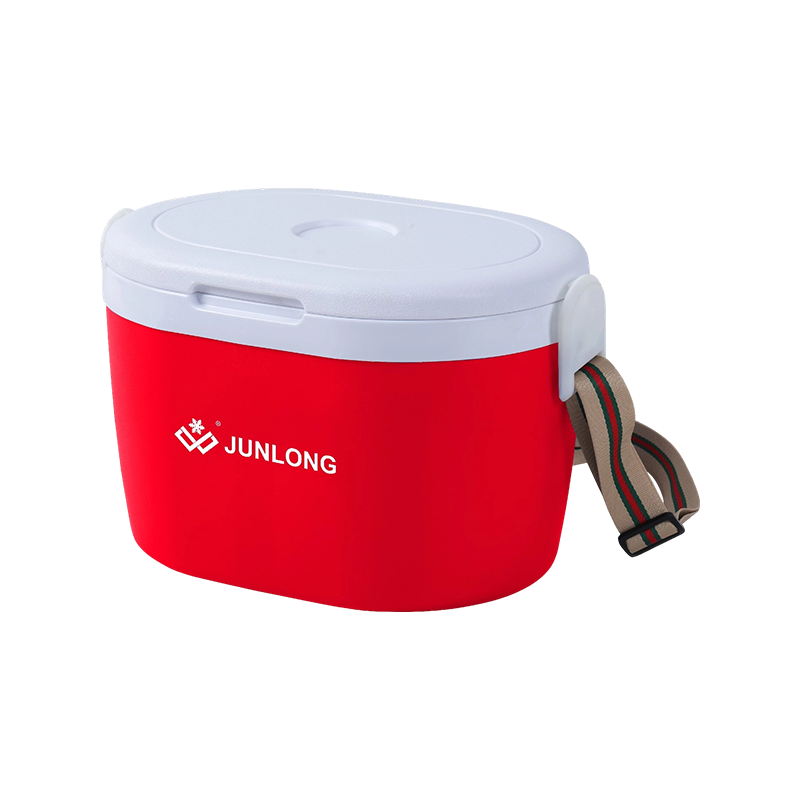
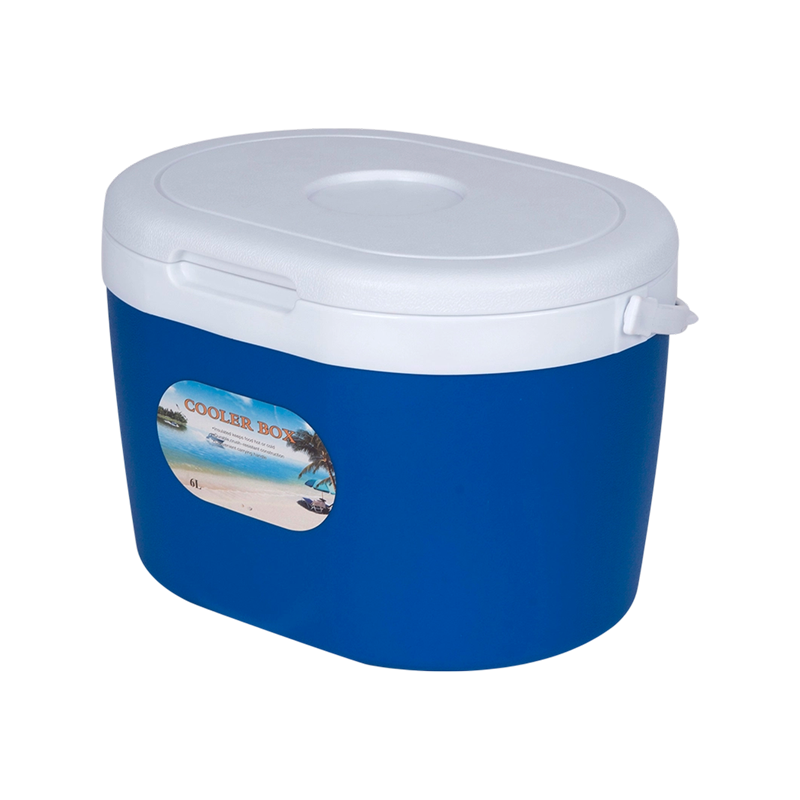 6L Insulated Cooler Box with Detachable Shoulder StrapA compact 6L cooler with detachable shoulder strap and locking lid, suited to short trips where portability and a small footprint matter.View Product →
What capacity really holds: 5L to 13L in practice
Capacity labels mislead people. The numbers below are realistic loads, assuming standard 330 milliliter cans with ice or a freezer pack filling the gaps.
| Capacity | Realistic load | Best carrying method | Who it suits |
|---|---|---|---|
| 5L | 4 to 6 cans plus ice | Hand carry | Single player, cart round, short session |
| 6L to 8L | 8 to 10 cans plus ice | Shoulder strap or handle | Walking player, side-pocket hanging |
| 9L to 13L | 12 to 18 cans plus ice, plus snacks | Cart basket or cart base | Pair of players, full-day round |
If you play in a group or pack sandwiches, you land in the 9L to 13L band. That still fits most cart baskets, but it sits near the upper limit. Measure your own basket before ordering.
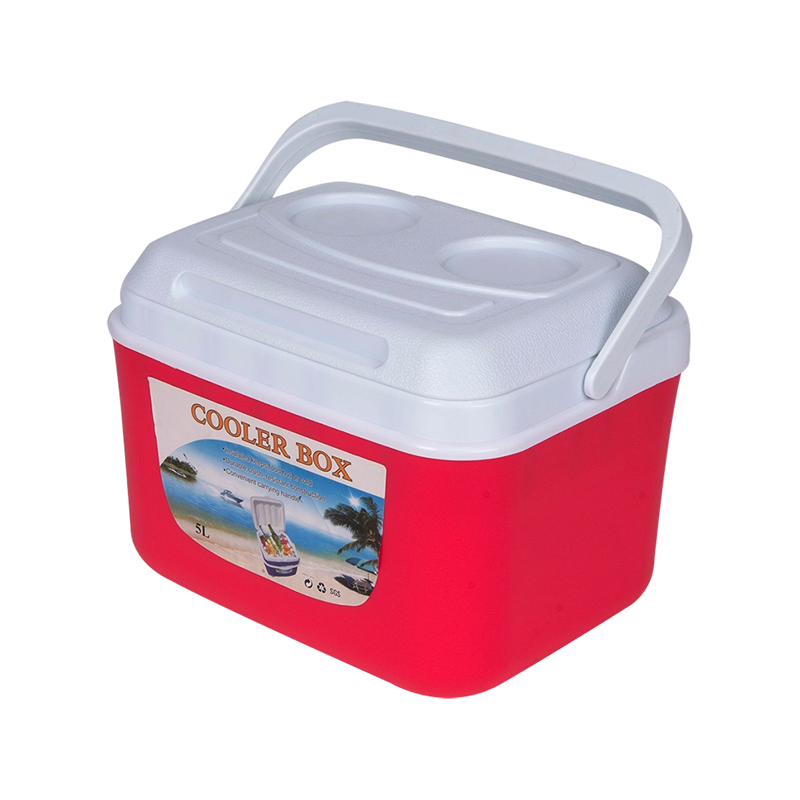 5L Compact Foam Insulated Cooler Box with Cup HolderA lightweight 5L personal cooler with EPS foam insulation, food-grade liner, cup holder and hidden handle for individual lunches or short outings.View Product →
If the container also has to pour, not just hold cans, the trade-off changes. A jug with a spout carries more liquid but tips more easily and takes up more room in a pocket. Think about the spout and the carry position together. For a closer look at how that category works, see how cooler jugs are typically used.
Five specifications that decide performance
Insulation material
Hard PU foam outperforms EPS beads and thin hollow-wall construction by a wide margin. Left in a basket for four hours of sun, a PU body might lose a third of its ice, while a cheap thin-wall shell can lose half. Wall thickness is the number that matters here, not the stated capacity.
Sealing method
Screw caps and compression gaskets seal far better than a simple snap lid. If the container will sit in a bag pocket or lie on its side, sealing is not negotiable. Fill it with water and turn it over before you commit to it.
Weight and handle
An empty weight between 1 and 2 kilograms suits a walking player. A molded handle beats smooth side walls when your hands are damp. A detachable shoulder strap adapts to both cart hooks and bag loops.
Drain port and access
A drain plug saves effort but adds a potential leak point. For a small can cooler, a simple screw lid or a removable top is usually enough.
Color and UV resistance
Light tones heat up more slowly in direct sun. For a box used outdoors season after season, UV-stabilized pigment has to go into the plastic at the molding stage, or the shell will chalk and crack within a season or two.
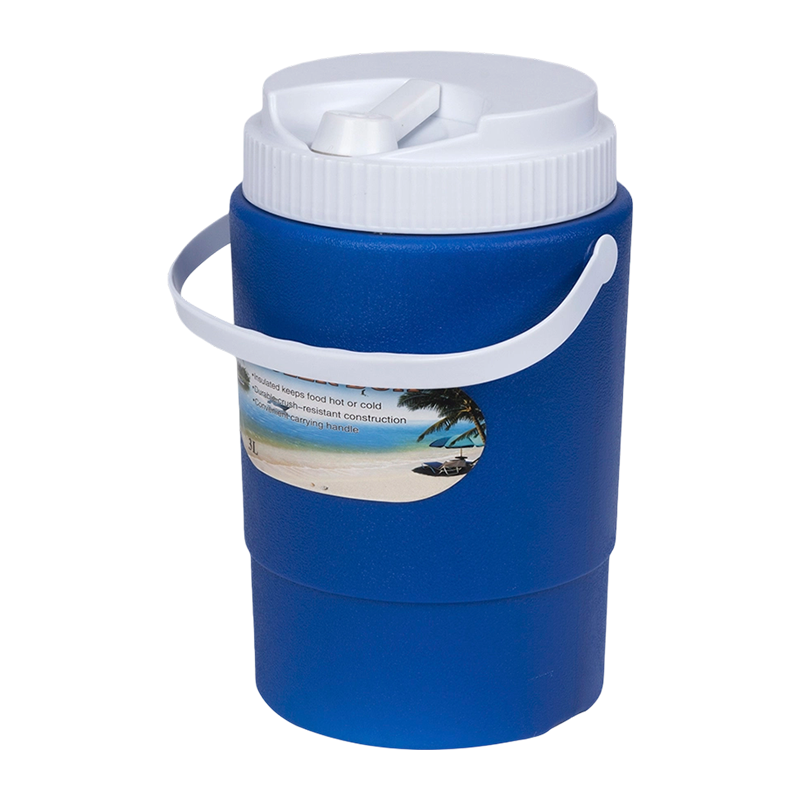 3L PU Insulated Cooler Jug with Sealing CoverA lightweight 3L wholesale cooler jug with PU insulation, food-grade PP liner and leak-resistant sealing cover for outdoor or sports events.View Product →
Five mistakes golfers keep making
- Filling the box with ice and drinks and then struggling to lift it on the course. Build the load around a 2 kilogram total.
- Putting an unsealed container into a bag side pocket. Condensation plus leakage soaks grips and spare clothing.
- Ignoring condensation on the outside. In humid weather the shell sweats, so pack an absorbent cloth or use a lined soft bag.
- Leaving the cooler in a hot car at the turn. Ice goes fast, and foam cores absorb heat they never fully shed.
- Buying on stated capacity alone. A 13L body that is 30 centimeters wide may not clear a 25 centimeter basket. Measure before you order.
Buying for a club, an event, or a retail program
If you are sourcing for a club shop, a tournament, or a promotional program, standard-product logic takes over. Three variables dominate the decision.
- Order quantity. Small orders on standard items let you test a batch before committing to a larger repeat run.
- Customization range. Color, logo, and packaging are the adjustments buyers ask for most. If you already hold drawings or a physical sample, go through a custom development path rather than forcing an existing mold.
- Lead time and supply stability. When molding, foaming, and assembly all run inside one factory campus, production schedules for volume orders are easier to hold.
The product line splits cleanly by capacity, which speeds up event selection. The 5L to 13L band works for individual gifts and player packs, the 15L to 38L band suits clubhouse and team use, and the 45L and above band covers event catering and long setups. To see how that structure is supported on the production side, look at how the factory is organized.
Quick checklist before you buy
- Measure the width of your cart basket, then compare it to the external dimensions, not the capacity rating.
- Choose PU foam insulation over thin hollow-wall construction.
- Keep the loaded weight under 2 kilograms for a walking round.
- Confirm the seal if the container will ride in a bag pocket.
- Treat a strap or molded handle as required, not optional.
- Pick a light shell color if the box will sit in direct sun for hours.
A golf bag cooler is not a complicated product category, but small mistakes in size and mounting cost you every round. Start from the capacity your carrying method allows, confirm the external dimensions against your basket or pocket, and only then compare insulation performance. A well-sealed 6L box that weighs under 2 kilograms loaded and drops cleanly into a cart basket will serve you better than any 20L unit that lives in the trunk.
Product Recommendation
link
Office
- TEL: +86-574-63787606
- Phone: +86-13777994798
- E-mail: sales@nbjunlong.com
- WhatsApp: 13777967488
- Address: No. 1, Lane 3, Development Road, Longtouchang, Longshan Town, Cixi City, Zhejiang Province, China
Get In Touch
Copyright © Ningbo Junlong Outdoor Products Co., Ltd. All Rights Reserved.
China Plastic Insulated Cooler Box Manufacturer Custom Cooler Box Supplier
